QUANTÜ Event Brings Together Science, Women’s Leadership, and Business to Advance Chile’s Quantum Future
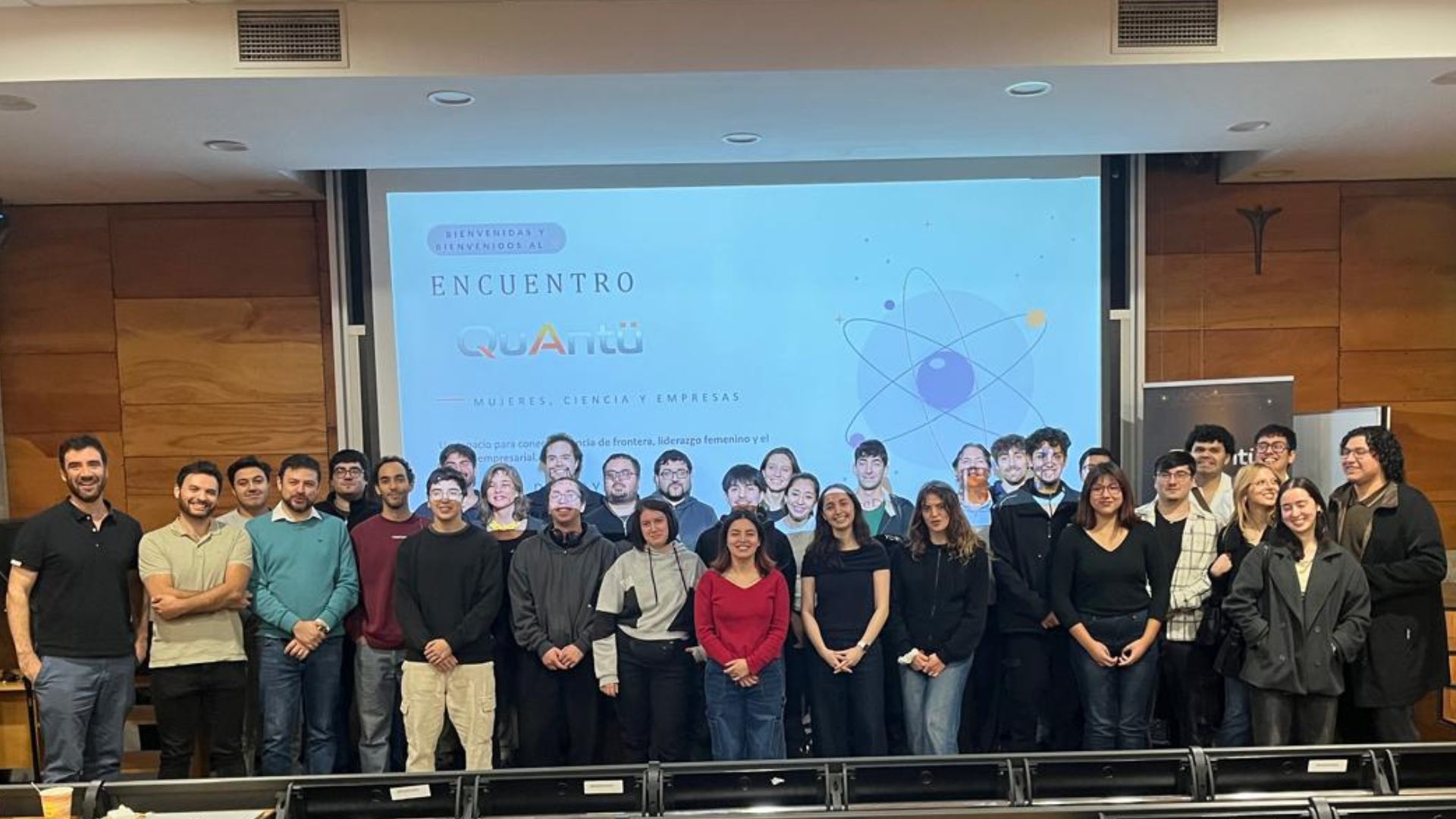
The event emerged at a time when quantum science is raising new questions, driving technological innovation, and creating new forms of collaboration. Against this backdrop, the initiative provided a forum for interdisciplinary exchange, with a particular emphasis on women’s leadership in STEM, encouraging the active participation of female university students and professionals interested in becoming part of this emerging field. The event was opened by Dardo Goyeneche, director of the Neutral Atom–Based Quantum Computing Anillo Project (ATE25) and a researcher at the Institute of Physics. In his opening remarks, he highlighted the impact this field will have on the country: “We aspire to build more than just a quantum computer: this project will create an entire ecosystem—a place to connect, collaborate, and adopt cutting-edge technologies that are not yet available in Chile. While we face the challenge of overcoming the difficulties this technology presents, we also have the tremendous advantage of working at the forefront of science in a field of strong global interest.” The program featured presentations by researchers and students from the University of Santiago de Chile, the University of Chile, and Federico Santa María Technical University, as well as members of the research group working in this field at UC’s Faculty of Physics. They were joined by representatives from CoreDevX, a company participating in the Anillo Project, and IBM. Topics included advances in quantum theory and experimentation, algorithms, quantum materials, and industrial applications. One of the highlights of the first day was a panel discussion moderated by UC researcher Hilde Buzza, featuring Javiera Canales, Senior Data Consultant at the Chilean company CoreDevX; Elisa Torres, founder of the international initiative Girls in Quantum; and Melissa Maldonado, a faculty member at the Institute of Physics. The panelists shared their experiences in STEM, discussing the challenges they have faced and the strategies that have enabled them to become leaders in their respective fields. The second day featured further presentations, including talks by Juan Pablo Soto of IBM and Francisco Albarrán, a faculty member at USACH. The day concluded with a tour of the Institute of Physics laboratory where QuAntü, the first quantum computer to be built in Chile, is under construction. The visit gave participants a closer look at the cutting-edge research being conducted at these facilities while strengthening ties between academia and industry. The QuAntü event helped highlight the role of women in advancing science and technology and fostered new opportunities to strengthen Chile’s quantum ecosystem.